
Buildings Under Climate Pressure: What Changing Weather Really Means for Your Property
Published on 5/4/2026 · by Régis Demeulenaere
A Changing Climate, a Vulnerable Building Stock
Belgium can no longer avoid the concrete consequences of climate disruption. What still seemed like theoretical projection not long ago is now a daily reality for homeowners, property managers and insurers alike. The devastating floods of July 2021 in Wallonia — the worst in over a century — left a lasting mark on collective memory. They were not an isolated accident.
According to a joint study by the University of Liège and the Royal Meteorological Institute, extreme rainfall in Belgium will intensify drastically by 2100, with accumulations potentially exceeding 100 mm within 24 hours in vulnerable areas. The principle is thermodynamic: each degree of warming increases the atmosphere's capacity to retain moisture by 7% — and therefore the intensity of precipitation when it is finally released.
At the same time, heatwaves are becoming more frequent. Their occurrence is expected to double by 2040–2070, with average annual temperatures potentially 3°C higher than today under a pessimistic scenario. And between the two extremes — flooding and heat — prolonged droughts are slipping in, proving equally destructive to the built environment.
Building Pathologies in the Climate Era
Climate disruption is generating a wide spectrum of disorders in existing buildings. Here are the main threats that are intensifying:
Infiltrations and flooding. Torrential rains overwhelm stormwater drainage systems designed for flow rates that no longer match today's extreme episodes. Water enters basements, underground spaces and ageing façade joints. It degrades insulation, interior finishes and electrical installations. In severe cases, it weakens the structural elements themselves.
Mould and moisture damage. After a flood or repeated infiltrations, moisture embeds itself permanently within walls. Mould proliferates, saltpetre appears, and dry rot — a particularly dangerous wood-destroying fungus — can attack roof frames and timber elements. These pathologies are insidious: they often develop silently, behind partition walls and surface finishes, long before they are detected.
Structural cracks caused by drought. Less visible in the media than flooding, drought is equally destructive for buildings. Clay-rich soils, common across Belgium, shrink during prolonged heat episodes. This shrink-swell phenomenon causes differential foundation movements, which manifest as characteristic cracks: diagonal fractures around window and door openings, doors and windows that no longer close properly, localised subsidence. Buildings that are structurally sound can develop serious structural disorders over the course of a single scorching summer.
Accelerated deterioration of façades and roofs. Alternating freeze-thaw cycles, repeated exposure to extreme heat, violent storm winds: building materials are ageing faster. Poorly maintained roofs become permeable, façades crack, joinery warps. What once required maintenance every twenty years may now demand attention every ten.
Indoor air quality risks. Beyond structural damage, indoor air quality deteriorates in buildings affected by excessive moisture. Mould spores, fungi, volatile organic compounds: occupants face real health risks that are frequently underestimated.
What This Means for Your Property
The consequences of these climate shifts extend well beyond mere inconvenience. In 2026, climate disruption directly influences the value, insurability and comfort of real estate.
Buyers are increasingly attentive to climate risks when making a purchase. A property located in a flood-prone area, showing untreated moisture damage or unexamined cracks, loses value — and may become difficult to insure or sell. Conversely, an owner who anticipates, documents the condition of their property and carries out the necessary work protects their asset over the long term.
On the insurers' side, pressure is growing. Belgium's insurance system is already weakened by the multiplication of climate disasters. Coverage exclusions are increasing for buildings in risk zones or poorly maintained properties. The question is no longer "will I be compensated?" but "to what extent?".
Why Call on an Expert Bureau?
Given the growing complexity of climate-related disorders, the intervention of an independent technical building expert is no longer confined to judicial disputes. It is becoming a reflex of prudence for any property owner, investor or real estate manager who takes their interests seriously.
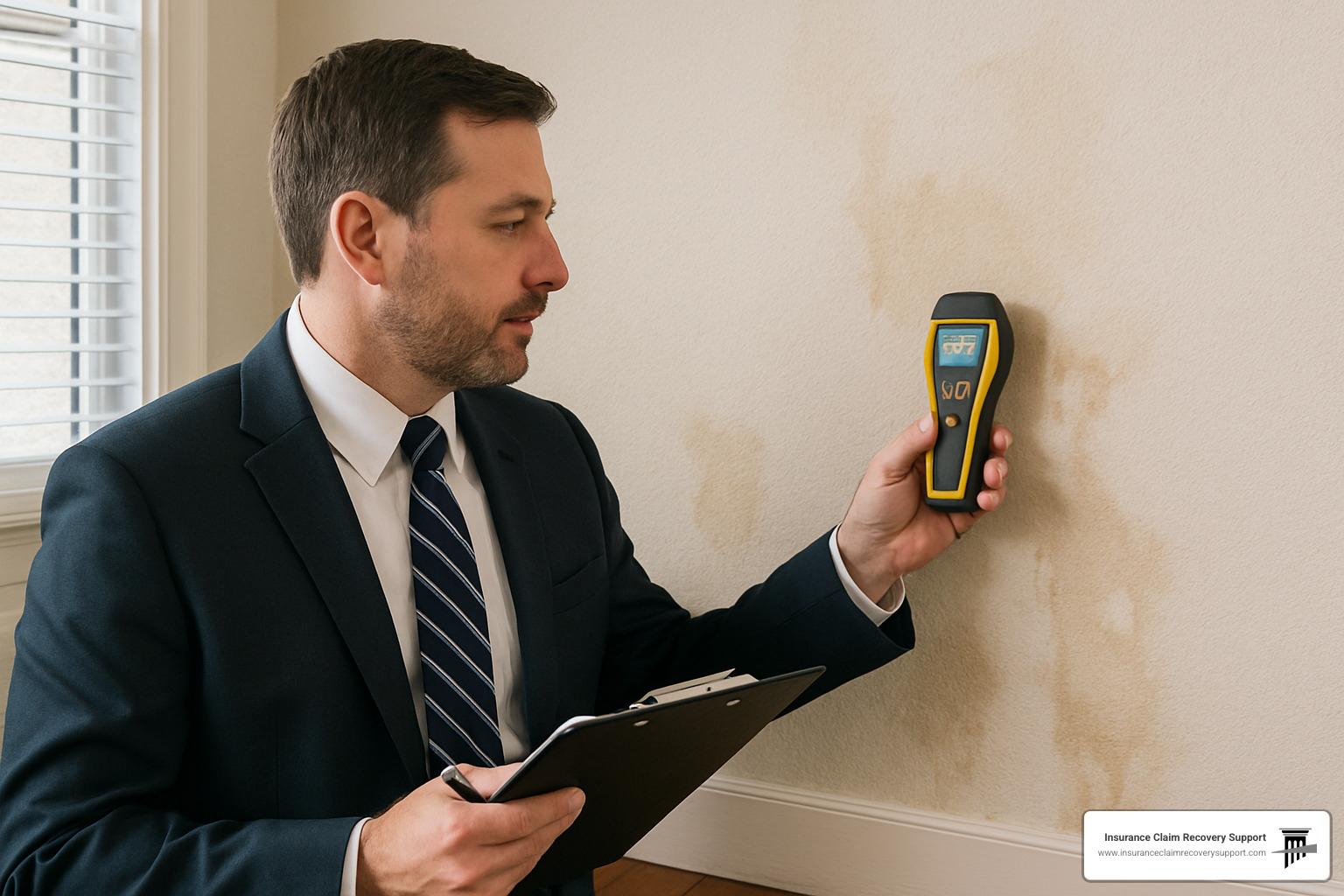
Identifying the precise cause of damage. A moisture problem can have very different origins: façade infiltration, capillary rising damp, thermal bridging, condensation, water damage from the flat above, or a defective pipe. Misdiagnosing the cause inevitably leads to inappropriate treatment — and unnecessary expense. A qualified expert has the tools and method to establish an accurate diagnosis: moisture measurements, infrared thermography, specific tests. Crucially, they work for no building contractor, which guarantees their objectivity.
Building a legally robust case file. In the event of a dispute with a contractor, neighbour, seller or insurer, a report drawn up by an independent professional is a pivotal document. It records the condition of the property at a specific point in time, identifies responsibilities and provides a costed assessment of the remediation works required. This document can be used in amicable mediation or before the competent courts.
Acting before it is too late. Many climate-related damage patterns develop slowly and insidiously. A crack that appears benign may signal a serious structural problem. A faint musty smell in a basement may conceal an advanced dry rot infestation. A preventive expert assessment — carried out before purchasing a property, before construction works, or in the wake of a weather event — detects early what would cost infinitely more to address later.
Directing works efficiently. Armed with a reliable diagnosis, the property owner can approach the appropriate tradespeople with a precise specification, avoiding vague quotes and ineffective works. The expert can also supervise the construction site and verify the conformity of the completed work.
Defending your interests against insurers. When a climate claim is filed, insurers appoint their own experts. Engaging an independent expert allows you to negotiate on equal footing, challenge underestimated assessments and obtain compensation proportionate to the actual damage sustained.
What the Future Holds
Climate experts and building specialists agree: this is only the beginning. Belgium's building stock — a large part of which dates from before the 1980s, when today's climate norms did not exist — will have to cope with stresses it was never designed to withstand.
Investments in climate resilience — waterproofing, enhanced insulation, upgraded drainage systems, foundation protection — are now unavoidable. But before any investment, one thing is essential: knowing precisely where you stand. That is exactly what an independent technical expert assessment provides.
In a world where meteorological extremes are becoming the new normal, having an expert by your side is no longer optional. It is a responsible decision to protect what is, for most people, the most valuable asset of a lifetime.
Sources: University of Liège / Royal Meteorological Institute (IRM), advalvas.be, Dégand & Partners Blog, architectura.be, BatiExpert, Environment Wallonia